

Mangoes are one of the most loved fruits in the world. Sweet, juicy, and full of flavor, they are called the “King of Fruits” for a good reason. Whether you eat them fresh, in smoothies, salads, or desserts, mangoes bring sunshine to your plate. In this long, easy-to-read guide, we cover everything: the origin of mangoes, popular types of mangoes, top mango-producing countries, amazing health benefits, how to pick and store them, fun facts, and tasty recipe ideas.
Origin and History of Mangoes: From Ancient Times to Your Table
Mangoes (scientific name Mangifera indica) originated in the northeastern part of the Indian subcontinent. This includes areas in modern-day India, Bangladesh, and Myanmar. They have been growing there for over 5,000 years.
Ancient people in India loved mangoes. Hindu scriptures mention them as far back as 4000 B.C. Buddha is said to have rested under a mango tree. The fruit traveled with traders and explorers. Around 300-400 A.D., mango seeds went to the Middle East, East Africa, and later South America. Portuguese traders in the 15th century brought them to more places and started international trade. The word “mango” comes from the Malayalam “manna” or similar local names.
Today, mango trees grow in almost all tropical and some subtropical regions. They can live for hundreds of years and grow very tall — up to 100 feet!
Top Mango Producing Countries in the World
India is the clear leader in mango production. Here are the top mango-producing countries based on recent data (around 2023-2025):
- India — Produces over 25-26 million tons every year. Famous for varieties like Alphonso and Kesar.
- Indonesia — Around 4 million tons.
- China — About 3.8-4 million tons.
- Pakistan — Strong producer with sweet varieties like Chaunsa.
- Mexico — Major exporter to the US and other countries.
- Brazil — Growing fast in South America.
- Malawi (Africa’s top) and others like Thailand, Bangladesh, Vietnam, and Egypt.
These countries together make up the majority of the world’s mango supply. India grows the most but also eats a lot locally. Mexico and Thailand are big exporters.
Popular Types of Mangoes: Which One Should You Try?
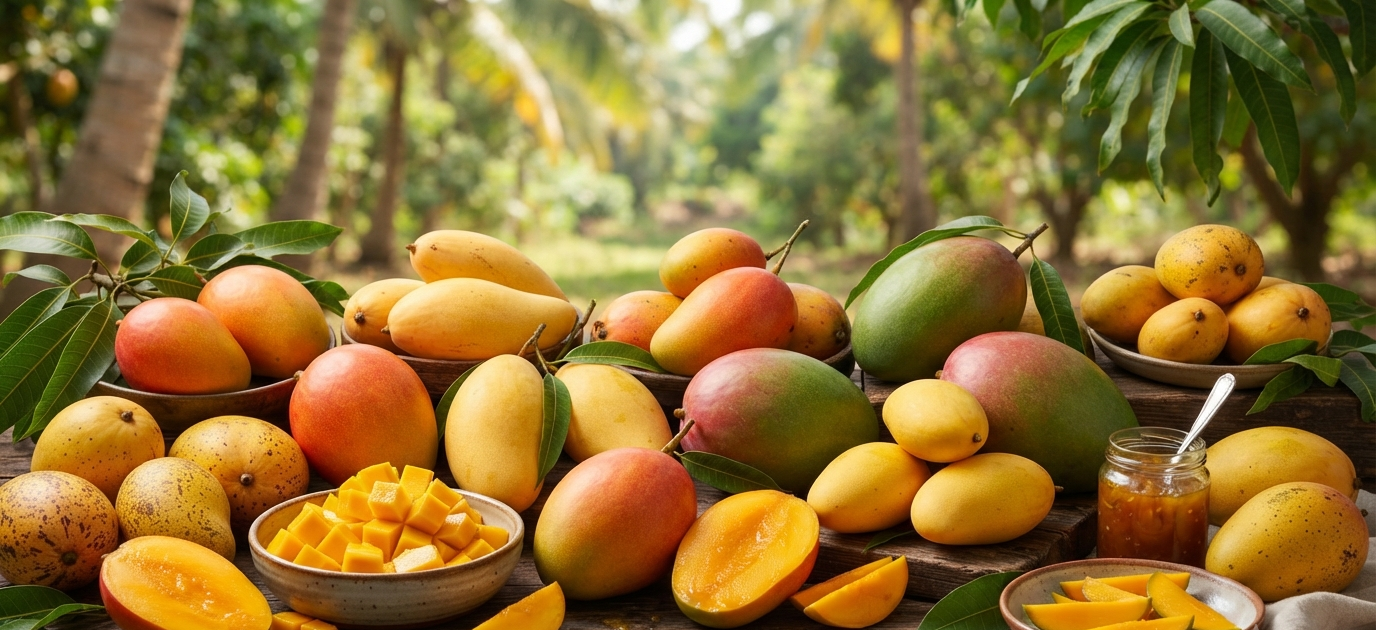
There are over 1,000 varieties of mangoes worldwide! Here are some of the most popular ones you can find in stores or markets:
- Alphonso (Hapus): Often called the “King of Mangoes” from India. Super sweet, fragrant, and low-fiber. Perfect for eating fresh or making pulp.
- Tommy Atkins: Common in the US. Red-green skin, sweet-tart taste, good for shipping.
- Kent: Juicy, low-fiber, sweet. Great for smoothies.
- Ataulfo (Honey Mango): Small, yellow, very sweet and creamy. Excellent for desserts.
- Keitt: Large, green even when ripe, sweet with less fiber.
- Kesar: From Gujarat, India. Rich orange color and saffron-like aroma.
- Chaunsa (Chausa): Very sweet and juicy from Pakistan/India. Popular during peak season.
- Haden: Early season, aromatic with peach notes.
- Langra and Dasheri: Classic Indian varieties with unique flavors.
Each type has its own season, color, sweetness, and texture. Try different ones to find your favorite!
Amazing Health Benefits of Mangoes
Mangoes are not just tasty — they are packed with nutrition. One cup (about 165g) of sliced mango has roughly:
- 99 calories
- High in Vitamin C (over 60% of daily needs)
- Good amounts of Vitamin A, E, B6, Folate, Copper, and Fiber
Key Health Benefits:
- Boosts Immunity: Vitamin C and antioxidants help fight infections and keep your body strong.
- Good for Eyes and Skin: Beta-carotene turns into Vitamin A, which supports vision and healthy skin.
- Helps Digestion: Fiber aids regular bowel movements and gut health.
- Supports Heart Health: Potassium, fiber, and antioxidants may help lower blood pressure and cholesterol.
- Antioxidant Power: Compounds like mangiferin fight free radicals and reduce inflammation.
- May Aid Weight Management: Low calorie, high fiber, and satisfying sweetness.
- Brain and Energy: B vitamins and folate support energy and brain function.
Mangoes are great for kids too, providing important nutrients for growth. Enjoy them in moderation as part of a balanced diet.
How to Choose, Ripen, and Store Mangoes
- Choosing: Look for mangoes that feel slightly soft, have a nice fruity smell at the stem end, and no big bruises. Color varies by type — don’t judge only by color.
- Ripening: Keep unripe mangoes at room temperature in a paper bag with a banana or apple to speed it up.
- Storing: Ripe mangoes go in the fridge for up to 5 days. Cut mangoes should be eaten soon or refrigerated.
- Tip: If you find black fibers inside, they are usually harmless (natural vascular bundles) — the mango is still good if it smells sweet.
Delicious Ways to Enjoy Mangoes
- Fresh slices with a sprinkle of chili and lime (popular street food).
- Mango lassi (yogurt drink).
- Smoothies with banana and spinach.
- Mango salsa for tacos or grilled fish.
- Mango ice cream or sorbet.
- In salads with avocado and feta.
- Dried mango for snacks.
Mangoes work in both sweet and savory dishes!
Fun Facts About Mangoes
- The paisley pattern is inspired by the shape of a mango.
- Mango is the national fruit of India, Pakistan, and the Philippines.
- A mango tree can produce fruit for over 300 years.
- The heaviest mango on record weighed over 3 kg!
- Less than 1% of mango flowers actually become fruit.
Conclusion: Why Mangoes Are Truly the King of Fruits
Mangoes bring joy, nutrition, and tropical flavor to millions of people every year. From their ancient origins in India to farms around the world, these fruits continue to delight us. Whether you love Indian Alphonso, Mexican Kent, or any other variety, there is a perfect mango waiting for you.
Next time you see mangoes in the store, pick some up and enjoy their sweetness and benefits. Share this guide with friends who love mangoes too!
Have a favorite mango type or recipe? Tell us in the comments. Happy mango eating!