
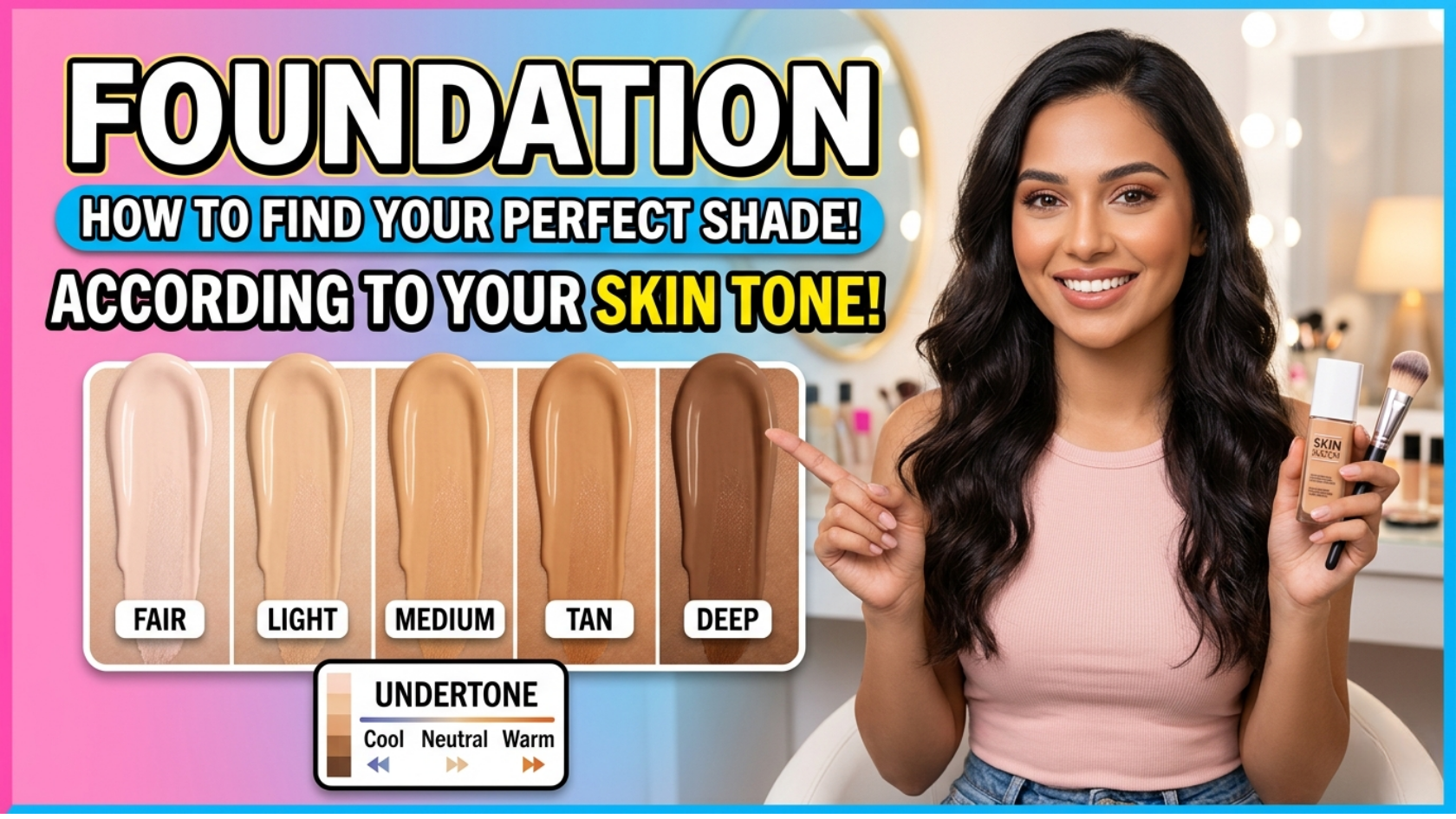
Struggling to find a foundation that doesn’t look cakey, orange, ashy, or like a mask? You’re not alone. Choosing the best foundation shade for your skin tone is one of the most common makeup frustrations but it doesn’t have to be.
In this ultimate guide, we’ll break down everything you need to know: identifying your skin tone and undertone, testing methods that actually work, common mistakes to avoid, and pro tips for a seamless, natural-looking finish. Whether you have fair, medium, deep, or olive skin, you’ll walk away knowing exactly how to match foundation like a pro.
By the end, you’ll never waste money on the wrong shade again. Let’s dive in!
Why Finding the Right Foundation Shade Matters
A mismatched foundation can make your skin look dull, uneven, or artificial—no matter how good your skincare routine is. The right shade blends seamlessly into your jawline and neck, enhances your natural glow, and lasts all day without oxidizing (turning orange or gray).
Key factors for the perfect match:
- Skin tone (surface color depth)
- Undertone (the subtle hue underneath)
- Skin type (dry, oily, combination, mature, etc.)
- Formula and finish (matte, dewy, luminous)
Getting these right prevents the dreaded “mask effect” and gives you that flawless, “your skin but better” look.
Step 1: Determine Your Skin Tone
Your skin tone refers to how light or deep your complexion is. It can change slightly with seasons (tanning or winter pallor), but it’s the starting point for shade selection.
Common skin tone categories:
- Fair/Porcelain: Very light skin that burns easily, often with visible redness.
- Light: Light beige or ivory tones; may tan minimally.
- Medium/Light-Medium: Beige to olive tones; tans moderately.
- Tan/Wheatish/Olive: Golden or olive hues; tans easily.
- Deep/Dark: Rich brown or ebony tones; rarely burns.
Pro tip: Compare your bare face to your neck and chest in natural daylight. Your foundation should match the skin on your neck for a seamless blend.
Step 2: Identify Your Undertone
Undertone is the subtle color beneath your skin’s surface and never changes—even if you tan. This is where most people go wrong.
Three Main Undertones:
- Cool: Pink, red, or blue hues. Veins on your wrist appear blue/purple. You look best in silver jewelry and cool-toned clothes (blues, purples). Foundations often labeled C, Pink, Rose, or Porcelain.
- Warm: Yellow, golden, or peach hues. Veins look green/olive. Gold jewelry flatters you most. Look for W, Golden, Yellow, or Honey shades.
- Neutral: A balanced mix of cool and warm. Veins appear blue-green. Both silver and gold look good. Shades labeled N or Neutral work best.
Quick Tests to Find Your Undertone:
- Vein Test: Look at the inside of your wrist in natural light. Blue/purple = cool; Green = warm; Mix = neutral.
- Jewelry Test: Does silver or gold make your skin glow more?
- White Fabric Test: Hold pure white vs. off-white/cream to your face. If white washes you out, you’re likely warm or neutral.
- Sun Reaction: Burns easily without tanning = cool; Tans golden = warm; Mix = neutral.
For olive skin (common in medium to deep tones), you may lean warm or neutral with a green/golden cast—avoid overly pink or yellow shades that can look off.
Step 3: How to Test and Match Foundation Shades Properly
Never choose a shade by looking at the bottle or swatching on your hand/arm—that’s a recipe for disaster.
Correct Swatching Technique:
- Go to a store with good lighting (or use samples).
- Choose 3 shades close to your estimated tone/undertone.
- Apply in thin stripes along your jawline (where face meets neck).
- Blend slightly and wait 5–10 minutes for oxidation.
- Check in natural daylight (step outside or near a window).
- The winning shade should disappear into your skin—no lines, no color cast.
Bonus: Take photos in different lighting to confirm. If shopping online, use brand shade finders or tools like Findation.com.
Best Tools and Apps for Foundation Shade Matching
Make technology your best friend:
- Brand-Specific Finders: Maybelline Perfect Shade Finder, L’Oréal, Sephora Shade Finder, Ulta Shade Matcher.
- Cross-Brand Tools: Findation.com (match your current shade across brands).
- AI Apps: Upload a selfie for instant recommendations (many beauty apps and brand sites offer this in 2026).
- In-Store Services: Sephora Color IQ, Ulta virtual shade match, or free shade matching at counters.
These tools have improved dramatically and can save hours of trial and error.
Common Mistakes When Choosing Foundation Shade (And How to Fix Them)
- Ignoring Undertone → Results in orange, pink, or ashy finish. Always prioritize undertone over depth.
- Swatching on the Wrong Area → Hands are darker and drier than your face. Always use jawline.
- Not Accounting for Oxidation → Many foundations darken after 10 minutes. Wait it out.
- Choosing Too Light or Too Dark → Err slightly lighter if unsure—you can warm it up with bronzer. Never go more than 1–2 shades off.
- Ignoring Skin Type → Oily skin needs matte/long-wear; dry skin needs hydrating/dewy formulas.
- Testing in Bad Lighting → Store lights can distort colors. Always check in daylight.
Recommended Foundations by Skin Tone & Undertone (2026 Updates)
While the best shade depends on your exact match, here are popular formulas praised for inclusive shade ranges and performance:
- For Fair/Cool Skin: Look for pink-leaning shades in hydrating formulas like Armani Luminous Silk or drugstore options with “porcelain” or “rose” labels.
- For Medium/Warm or Olive: Golden or neutral shades in serum-like bases (e.g., options with broad ranges like Fenty or Haus Labs for olive-friendly tones).
- For Deep Skin: Rich, non-ashy shades in long-wear formulas with warm or neutral undertones.
- Mature or Dry Skin: Luminous, skincare-infused foundations that don’t settle into lines.
- Oily/Combination: Matte or soft-matte with blur technology.
Always check current shade ranges—many brands expanded to 40–60+ shades by 2026 for better inclusivity.
Extra Tips for a Flawless Foundation Match Every Time
- Prep Your Skin: Cleanse, moisturize, and use primer for better blendability.
- Seasonal Adjustments: Keep two shades—one for winter, one slightly deeper for summer.
- Mix Shades: Many people blend two shades for a custom match.
- Set Properly: Use setting powder or spray to lock in color and prevent shifting.
- Consider Coverage & Finish: Sheer for natural looks; full for evenings or blemish coverage.
Frequently Asked Questions (FAQ)
What should I do if I’m between two shades?
Always go with the lighter shade. It is much easier to add warmth with a bit of bronzer than it is to lighten a foundation that is too dark.
Does foundation shade change in the summer?
Yes. Most people need a “Summer Shade” (deeper) and a “Winter Shade” (lighter). You can often mix the two during the transition months of Spring and Fall to get a custom match.
Why does my foundation look grey?
This is a sign of a “mismatched undertone.” If a warm-toned person wears a cool-toned foundation, it often pulls grey or ashy. Ensure your foundation’s name includes keywords like “Golden,” “Honey,” or “Warm.”
Final Pro Tip
Before you commit to a full bottle, ask for a sample! Most high-end beauty counters will give you a 3-day supply. Wear it for a full day to see how the color holds up against natural oils and different lighting environments.
Found your perfect match? Let us know your favorite foundation brand in the comments below!