
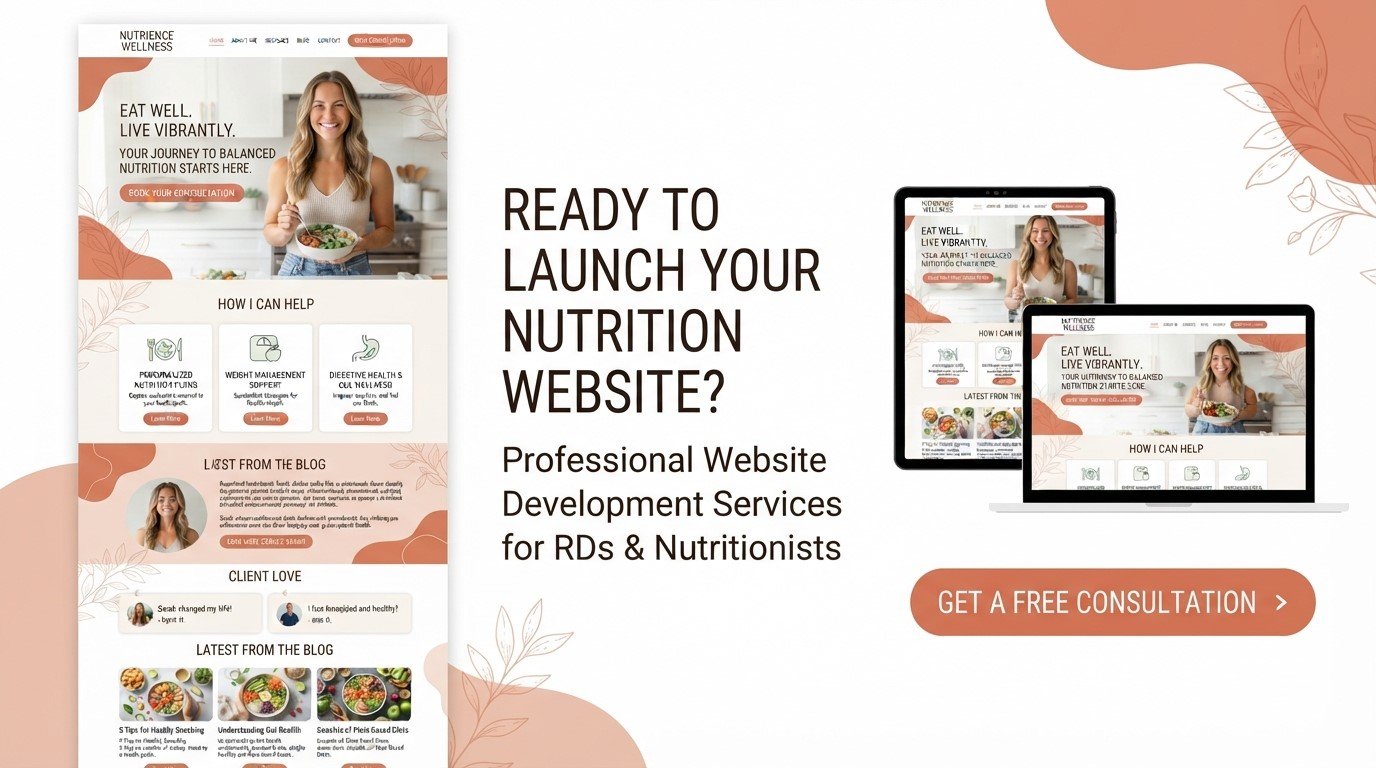
A professional website is one of the most valuable assets a nutritionist, dietitian, nutrition coach, or wellness professional can own. It works around the clock to introduce your practice, answer common questions, demonstrate expertise, and invite potential clients to take the next step.
Unlike a generic business site, a nutritionist website must balance warmth and approachability with clear professionalism and trust. Clients are often dealing with personal health goals, dietary changes, or medical conditions. They need to feel confident that the person behind the site is qualified, transparent, and genuinely helpful.
This guide covers everything you need to know about creating or improving a nutrition practice website in 2027. You will learn what pages matter most, how to structure a homepage that converts, design principles that build credibility, essential features, SEO and local SEO strategies, content ideas, technical performance, accessibility, security, costs, common mistakes, and a practical launch checklist.
What Makes a Great Nutritionist Website?
An effective nutritionist website does more than look polished. It clearly communicates who you help, how you help them, and why someone should choose you. It feels calm and trustworthy rather than clinical or salesy. Visitors should be able to understand your services, see your credentials, read real client experiences, and book or inquire with minimal friction.
Strong nutrition websites share several characteristics. The design feels professional yet human. Messaging is specific rather than vague. Content educates without making unsupported health claims. Navigation is simple. Mobile experience is excellent. Technical foundations support fast loading and search visibility. Calls to action feel natural and helpful rather than pushy.
The best sites also support the full client journey: discovery through search or referrals, education through resources and blog content, trust-building through credentials and testimonials, and conversion through clear booking or contact options.
Essential Pages Every Nutritionist Website Needs
Not every nutrition practice needs dozens of pages. A focused set of well-written pages usually outperforms a sprawling site filled with thin content.
Homepage
The homepage is your digital front door. It should quickly answer who you help, what you offer, and what the visitor should do next. More detail on ideal homepage structure appears later in this guide.
About Page
This page tells your professional story. Include your background, qualifications, approach to nutrition, and the types of clients you enjoy working with. Professional photography helps visitors connect with you as a real person. Keep the tone warm and authentic.
Services Page
Clearly describe the services you provide. Examples include one-on-one consultations, meal planning support, specialized programs for specific goals, corporate wellness sessions, or online coaching packages. Use plain language and focus on outcomes and process rather than jargon.
Programs and Packages
If you offer structured programs or tiered packages, give each its own clear description. Outline what is included, the typical duration, and who the program is best suited for. Transparent information reduces hesitation and supports better-qualified inquiries.
Booking or Contact Page
Make it easy to take action. Offer a simple contact form, a booking calendar if you use one, or clear instructions for scheduling. Reduce form fields to the essentials so visitors are more likely to complete them.
Testimonials
Social proof is powerful in health-related fields. Collect permission-based client feedback that focuses on experience and results without making medical claims. Feature a mix of short quotes and longer stories where appropriate.
FAQ Page
Address common questions about your services, process, pricing structure if you share it, preparation for sessions, and what clients can expect. A good FAQ reduces repetitive emails and builds confidence.
Blog or Resources
Educational content supports both SEO and client education. Share practical articles, recipes, guides, and checklists that demonstrate your expertise while remaining responsible and non-prescriptive.
Privacy and Legal Pages
Include a privacy policy, terms of use, and any required disclaimers. Requirements vary by location, so consult local regulations or legal guidance when handling personal or health-related information.
What Should a Nutritionist Homepage Include?
A strong homepage guides the visitor from curiosity to action without feeling overwhelming.
Start with a clear headline that speaks to the people you serve. Follow with a short supporting statement that explains the benefit of working with you. Immediately below the hero section, introduce the types of clients or goals you focus on so visitors can self-qualify.
Next, summarize your core services or programs. Use concise descriptions and link to more detailed pages. Highlight key benefits such as personalized support, practical strategies, or flexible online options.
Display credentials and professional affiliations early enough that trust begins forming before the visitor scrolls too far. Include a selection of testimonials with names or first names and relevant context when permission allows.
Offer a clear invitation to book a consultation or download a helpful resource. Educational content previews, such as recent blog posts or popular recipes, can keep engaged visitors on the site longer. End with a strong but natural call to action and easy contact or booking options in the footer.
White space, readable typography, and a calm visual hierarchy help the page feel professional and approachable rather than cluttered.
Ready to Build a Professional Website for Your Nutrition Practice?
If you are a dietitian, nutritionist, nutrition coach, or wellness professional looking for a clear, trustworthy website that attracts clients and supports your practice, professional help is available. From strategy and design to WordPress development and SEO foundations, support is tailored to the needs of nutrition and health professionals.
You can explore the full range of web development services or get in touch to discuss your goals.
Nutritionist Website Design Principles
Design for a nutrition practice should feel trustworthy, modern, and human. Avoid overly clinical aesthetics that can feel cold, and avoid trendy designs that date quickly or undermine professionalism.
Color choices often work well with soft greens, warm neutrals, clean whites, and muted accent colors. These support a sense of health and calm without looking generic. Typography should be highly readable on both desktop and mobile. Pair a clear sans-serif for body text with a distinctive but professional heading font.
Images matter. Use high-quality photos of real food, lifestyle moments, and authentic professional portraits when possible. Stock imagery of perfect salads can feel impersonal. Consistent branding across colors, fonts, logo treatment, and photography style strengthens recognition.
Layout should prioritize clarity and scannability. Generous white space improves readability and reduces cognitive load. Mobile responsiveness is non-negotiable. Most potential clients will view your site on a phone first.
Accessibility belongs in the design process from the start. Good contrast, readable font sizes, clear focus states, and logical heading structure benefit everyone and support inclusive practice.
Building Trust on a Nutritionist Website
Trust is especially important when people are seeking guidance about food and health. Visitors look for evidence that you are qualified, experienced, and ethical.
Display relevant credentials, certifications, and professional memberships clearly. Mention years of experience or areas of focus without exaggeration. Client testimonials and reviews (shared with permission) provide social proof. Clear service descriptions help visitors understand exactly what they will receive.
Professional photography of you and your workspace or process humanizes the site. Transparent information about pricing structure or package options, where appropriate, reduces friction. Contact information should be easy to find.
Content should remain responsible. Avoid making specific medical claims or promising particular health outcomes. Focus on education, support, and the process of working together. This approach protects both you and your visitors while reinforcing professionalism.
Features Nutritionist Websites Should Have
Useful features depend on how you run your practice. Online appointment booking systems save time for both you and clients when you offer scheduled sessions. Simple contact and consultation forms work well for initial inquiries. Client intake forms can collect essential information securely before a first meeting.
Payment options become valuable if you sell packages or programs online. Email signup forms paired with helpful lead magnets, such as a meal planning checklist or seasonal recipe guide, support list building and ongoing relationship development.
A testimonials section, FAQ accordion, blog, and recipe or resource library help educate and convert. Automated confirmation emails improve the client experience after booking or form submission. Basic analytics help you understand which pages and content perform best so you can improve over time.
Choose tools that integrate cleanly and do not slow the site. Simpler is often better than feature-heavy.
SEO for Nutritionists
Search engine optimization helps potential clients find your practice when they look for support. Effective nutritionist SEO begins with understanding what people actually search for and matching the intent behind those searches.
Keyword research should focus on terms related to your services, specialties, and location if relevant. Service pages can target phrases such as nutrition coaching, dietitian consultation, or specific program names. Location pages or location mentions support local visibility. Blog content can answer broader educational questions and attract readers earlier in their decision process.
On-page SEO includes clear page titles, meta descriptions that encourage clicks, logical heading structure, descriptive image alt text, and natural internal linking between related pages. Technical foundations such as mobile optimization, fast loading speeds, and solid Core Web Vitals performance support both rankings and user experience. Structured data can help search engines better understand your content and business information.
Helpful, original content that demonstrates experience and expertise aligns with Google’s emphasis on quality and trustworthiness. Avoid thin or duplicated pages. Focus on genuine usefulness.
For deeper guidance on technical and content SEO practices, the documentation on Google Search Central remains an authoritative starting point.
Local SEO for Nutritionists
Many people search for “nutritionist near me,” “dietitian in [city],” or similar location-based terms. Local SEO helps your practice appear in these results and in Google’s local map pack.
A complete and optimized Google Business Profile is essential. Keep name, address, phone number, hours, services, and photos accurate and consistent with your website. Encourage satisfied clients to leave reviews and respond to them thoughtfully.
Your website should reinforce local relevance through location mentions where natural, service area information, and locally relevant content. Consistent NAP (name, address, phone) data across the web supports trust signals. Local content, such as guides relevant to your community or seasonal topics, can further strengthen relevance.
Online-only practices can still benefit from clear service-area language and content that speaks to the communities they serve.
Content Marketing Ideas for Nutritionists
Content helps you attract visitors, demonstrate expertise, and stay top of mind. Useful ideas include practical FAQs about nutrition habits, simple healthy recipes with clear preparation notes, beginner meal planning frameworks, grocery shopping guides, myth-busting articles that stay evidence-informed, seasonal eating ideas, and downloadable checklists or worksheets.
Client education topics that support your services without replacing professional advice work well. Keep language accessible and avoid diagnostic or treatment claims. Focus on empowerment and practical steps people can take in everyday life.
Consistency matters more than perfection. A steady rhythm of helpful content compounds over time for both search visibility and email or social sharing.
Website Speed and Performance
Slow sites frustrate visitors and can harm search visibility. Image optimization is one of the highest-impact improvements. Use modern formats, appropriate dimensions, and compression. Choose lightweight themes and limit unnecessary plugins or scripts.
Quality hosting, caching, and efficient code contribute to better Core Web Vitals scores. Test performance on both desktop and mobile. Google provides tools and documentation for measuring and improving Core Web Vitals.
Regular monitoring after launch helps catch performance regressions as content or features are added.
Mobile-Friendly Design
Most website traffic now comes from mobile devices. A nutritionist website must work well on phones and tablets. Check that text remains readable without zooming, buttons and links are easy to tap, forms are simple to complete, and navigation is intuitive on smaller screens.
Test real pages on actual devices rather than relying only on desktop browser resizing. Mobile experience directly affects both user satisfaction and search performance.
Accessibility Considerations
An accessible website serves more people and reflects inclusive values. Use sufficient color contrast, readable font sizes, clear button labels, logical heading structure, descriptive alt text for meaningful images, properly labeled form fields, and keyboard-navigable interactive elements.
Following established accessibility guidelines improves usability for everyone. Resources from the Web Content Accessibility Guidelines provide practical standards to reference during design and development.
Security and Privacy
Protecting visitor information is essential. Use HTTPS across the entire site. Keep software, themes, and plugins updated. Implement secure forms and spam protection. Maintain regular backups.
A clear privacy policy explains how you collect and handle data. Be especially thoughtful with any intake or health-related information. Legal requirements vary by jurisdiction, so obtain appropriate local guidance when needed.
How Much Does a Nutritionist Website Cost?
There is no single average price. Cost depends on several factors: whether you start with a template or custom design, the number of pages and complexity of content, branding work, professional copywriting, SEO setup, booking or payment integrations, custom functionality, photography, ongoing maintenance, and hosting quality.
A simple site built with a website builder will generally cost less upfront than a custom-designed and developed site with advanced features and strategic SEO. Ongoing costs such as hosting, domain, plugins, and content updates should also be considered as part of the total investment.
Focus on value relative to your goals rather than the lowest possible price. A site that attracts and converts clients effectively supports practice growth over time.
DIY Website Builder vs Professional Web Development
Website builders can work well for straightforward needs, especially when budgets are limited and technical requirements are simple. They offer templates, drag-and-drop editing, and relatively quick setup.
Professional web development becomes more valuable when you need custom design that reflects your brand precisely, advanced functionality, strong technical SEO foundations, conversion-focused structure, integrations with booking or practice tools, or ongoing strategic support. A developer who understands both design and marketing can help avoid common pitfalls and create a site that performs better long term.
Many nutritionists start with a builder and later invest in professional development as their practice grows. Others prefer professional help from the beginning to establish a strong foundation. The right choice depends on your skills, time, goals, and resources.
Common Nutritionist Website Mistakes
Several recurring issues limit the effectiveness of nutrition practice websites. Unclear messaging leaves visitors unsure who the site is for. Weak homepages fail to communicate value quickly. Missing or hard-to-find booking options create friction.
Poor mobile experiences, slow loading times, and generic stock imagery undermine professionalism. Thin or vague service pages leave questions unanswered. Absence of testimonials or credentials reduces trust. Confusing navigation, lack of local SEO signals, no content strategy, weak calls to action, and unsupported health claims can all hurt results.
Addressing these issues systematically improves both user experience and business outcomes.
How to Build a Nutritionist Website Step by Step
A structured process produces better results than jumping straight into design.
Begin with strategy: clarify your ideal clients, services, goals, and unique positioning. Create a sitemap that outlines the essential pages. Develop or refine branding elements including logo, colors, and photography style. Write clear, helpful content for each page.
Move into design and development, prioritizing usability, mobile experience, and performance. Implement SEO foundations including titles, headings, internal links, and technical basics. Test thoroughly across devices and browsers. Launch carefully and plan for ongoing content, measurement, and improvement.
This sequence reduces rework and keeps the project focused on outcomes that matter for your practice.
Nutritionist Website Launch Checklist
- Clear homepage messaging and calls to action
- Complete essential pages with original content
- Credentials and trust signals visible
- Mobile responsiveness verified on real devices
- Page speed and Core Web Vitals checked
- Forms and booking tools tested
- SEO titles, meta descriptions, and headings in place
- Image alt text and basic accessibility considered
- HTTPS and security basics confirmed
- Privacy policy and any required disclaimers added
- Google Business Profile claimed and optimized if relevant
- Analytics installed
- Contact information accurate and easy to find
Long-Term Website Growth
A website is not a one-time project. Over time it can support organic search traffic, referrals, direct bookings, email list growth, content marketing, program launches, educational resources, and stronger brand credibility.
Regular content updates, performance monitoring, user feedback, and iterative improvements help the site remain effective as your practice evolves. Treating the website as a living part of your business rather than a static brochure produces better long-term results.
Frequently Asked Questions
What should a nutritionist website include?
At minimum, a clear homepage, about page, services or programs information, a way to contact or book, credentials, and some form of social proof. Educational content and FAQs add further value.
How much does a nutritionist website cost?
Costs vary widely based on design approach, number of pages, features, content quality, and whether you use a builder or professional development. Consider both initial build and ongoing expenses.
Do nutritionists need a website?
A professional website provides a central place for potential clients to learn about you, build trust, and take action. It supports referrals, search visibility, and brand credibility in ways social media alone cannot fully replace.
What pages should a dietitian website have?
Core pages typically include home, about, services or specialties, contact or booking, testimonials, and privacy or legal information. A blog or resources section is highly recommended for education and SEO.
How can a nutritionist get clients through a website?
By combining clear messaging, strong trust signals, easy booking or contact paths, helpful content, and visibility through SEO and local search. The website works best as part of a broader client acquisition approach.
How do I get my nutritionist website on Google?
Create a technically sound site with original content, submit it through Google Search Console, optimize for relevant searches, and build a complete Google Business Profile if you serve a local area. Consistent helpful content supports ongoing visibility.
Should a nutritionist use WordPress?
WordPress is a flexible and widely used option that supports custom design, SEO control, and many integrations. Other platforms can also work well depending on needs and technical comfort. The platform choice should support your goals rather than dictate them.
Can nutritionists accept bookings through their website?
Yes. Many practices integrate scheduling tools that allow clients to book consultations or sessions directly. This reduces administrative back-and-forth and improves conversion rates when implemented thoughtfully.
How long does it take to build a nutritionist website?
Timelines depend on scope, content readiness, and whether the site is template-based or custom. A focused professional site can often move from strategy to launch in a matter of weeks when content and decisions progress steadily.
Should nutritionists have a blog?
A blog or resources section is one of the most effective ways to demonstrate expertise, answer client questions, and attract organic search traffic over time. Consistency and genuine usefulness matter more than high volume.
How important is mobile optimization?
Extremely important. Most people will encounter your site on a phone. Poor mobile experience leads to higher bounce rates and missed opportunities.
How does local SEO help nutritionists?
Local SEO improves visibility for location-based searches such as “nutritionist near me” or “dietitian in [city].” It combines website signals, Google Business Profile optimization, reviews, and consistent local information.
Moving Forward with Your Nutritionist Website
Building a professional nutritionist website is an investment in how your practice presents itself and grows. The most effective sites combine clear strategy, trustworthy design, helpful content, solid technical foundations, and ongoing attention.
If you prefer to focus on your clients and practice rather than managing the details of design, development, and SEO, professional support is available. Nutritionists and wellness professionals who want help with strategy, custom website design, WordPress website development, technical setup, or broader digital strategy can explore the services offered at afreenrahat.com. You can also learn more about the approach on the about page or reach out directly through the contact page.
Whether you build the site yourself or work with a professional, the principles in this guide will help you create a nutrition practice website that educates, builds trust, and supports sustainable client growth in 2027 and beyond.